Pages

Showing posts with label test tiles. Show all posts

Sunday, 8 April 2018

Cone 6 colour tests

Date: 9 April 2018
Clay: Keanes Stoneware 7

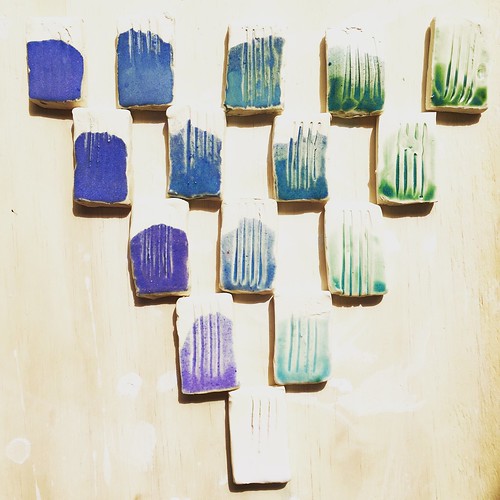
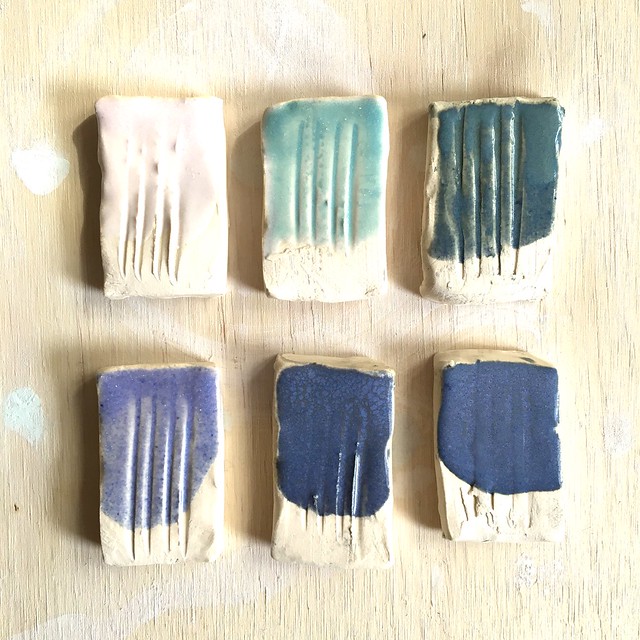
Following on from last week's Cone 6 tests. Adding different colour oxides in 50-50 mixture for HP and four different colour tests for 14Pine.

HP 
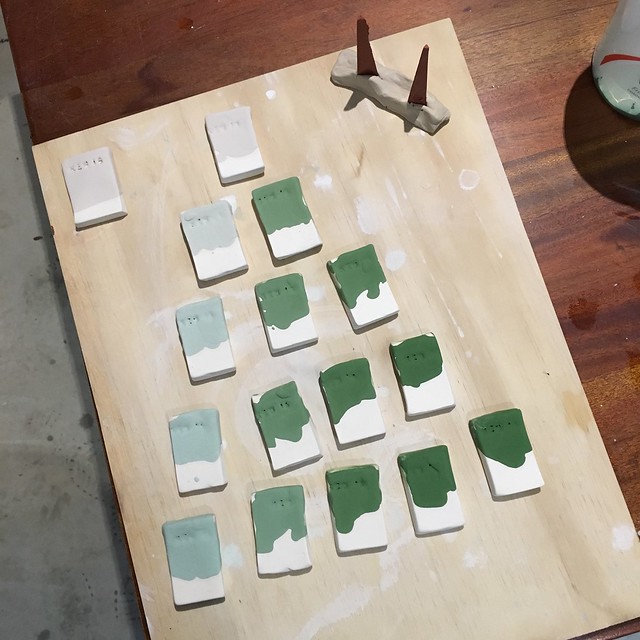
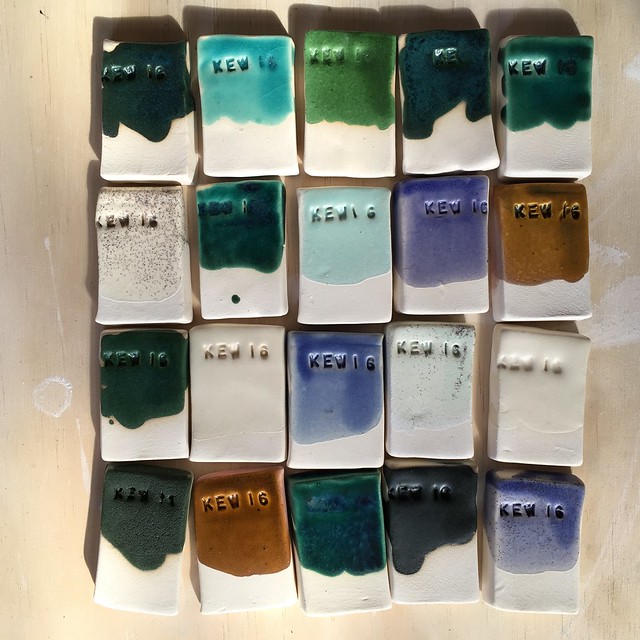
Colour tests 50:50 grid

Mixed up 250gms of Base Glaze and then divided it volumetrically into 5 equal batches.
Started the five test pots with double strength as they will be diluted by 50% when combined with another pot.

Added colourants as below:
A - 3% Copper Carbonate
B - 2% Cobalt Carbonate
C - 6% Red Iron Oxide
D - 12% Rutile flour
E - 8% Titanium Dioxide
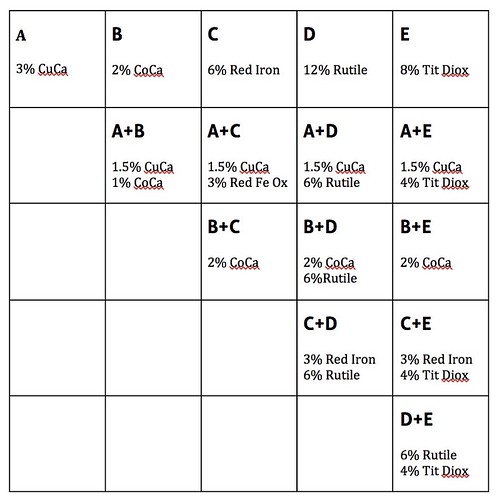
glaze test colours

14 Pine Street
Colour variations

Mixed up 200gms Base Glaze and divided it into four batches.
Added these colourants
1 - 0.375% Cobalt Carbonate, 6% rutile
2 - 0.25% Cobalt Carbonate, 3.5% Titanium dioxide, 2.25% Copper Carbonate
3 - 0.25% Cobalt Carbonate, 2.25% Copper Carbonate
4 - 0.25% Cobalt Carbonate, 3% Red Iron Oxide
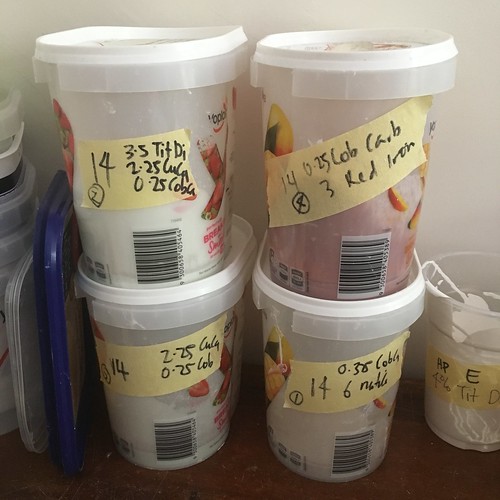
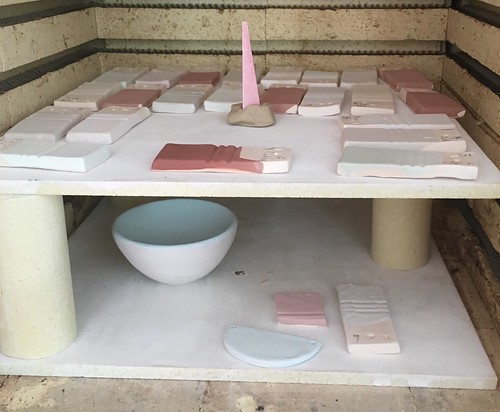
14P colour mixes
Kiln colour

Wednesday, 14 February 2018

Five Earthenware Base Recipes

Originally written 26 Sept 2016
glaze testing

Testing of five different Cone 04 matte or satin base recipes. All of the recipes have very similar ingredients, but different ratios.

These tests weren't ultimately successful as a week later four of them had crazed.

Retesting Julie's Satin (JMBC) and also testing a variation (JMBC revA), revised using hints from Glaze Simulator.

 A. Jackie's Matte via Priscilla Hollingsworth

38  Gerstley borate
10    Lithium carbonate
5    Nepheline syenite
5  Eckalite 2
42  Silica

5% Zircosil

Glaze testing

B. Satin Base (from here)

65.5 Ferro frit (4124) 3124
11    Nepheline syenite
5      Eckalite
42    Silica

C. Julie's Satin (from here)

27  Gerstley borate
7    Lithium carbonate
17  Whiting
4    Nepheline syenite
11  Eckalite 2
34  Silica

 D. Hirsh's Satin Matte

32  Gerstley borate
9    Lithium carbonate
17  Whiting
4    Nepheline Syenite
4    Eckalite 2
35  Silica

2% Bentonite

 E. Julie's Matte revised to fix crazing (JM rev A)

27  Gerstley borate
6    Lithium carbonate
17  Whiting
4    Nepheline syenite
12  Eckalite 2
34  Silica

Saturday, 17 September 2016

Julie's Satin Triaxial - Blog Ceramique


Glaze testing

Julie


Julie


This glaze test is for another Blog Céramique triaxial - Julie's Satin Base in green/blue

It's based on a cone 04 satin/matte base glaze recipe, which I think is based on the 
popular Jackie's Base glaze found around the net - the ingredients are similar - but this has added Calcium Carbonate (as an opacifier?) and different ratios. I used it on Keane's Earthenware 37 fired in my home kiln, an old Ward.

I mixed this one at home and fired it with a mixed firing of bisque and glazed pieces. One of the benefits of firing to cone 04 is being able to mix loads.

I had problems with reaching temperature as I had the controller programmed wrong and the kiln turned off too early before the cone had bent. Took another hour of fiddling with the controller to get it melted.

I don't think I did slow cool on this firing but it sort of had a soak due to the mistake.

The only substitution is Eckalite 2 for EPK which is unavailable here.

While I had the base mixed I did some extra experiments with cobalt, light blue stain and rutile.

Julie's Satin Base

17    Calcium carbonate
27    Gerstley borate
7      Lithium carbonate
4      Nepheline syenite
11    Eckalite 2 (my substitute for EPK)
34    Silica

In the Triaxial
A was the base glaze,
B was 3.5% Copper carbonate
C was 1% Chrome Oxide

Results

I think I might have made the colour too strong too, I can't remember if I divided the amounts into thirds or just put the whole amount in each corner.

As it is the chrome seems unmelted and has taken on a rough burnt looking texture where it is most concentrated. The colours certainly look different to the sample tests on the BC blog.

Also the glaze has crazed in its base form and on some of the copper side.

I love the finish of this one though and will try to reformulate it to fix the crazing. Has a lovely thick buttery matte texture.

Glaze testing

Naragon White cone 6 results

Glaze testGlaze tilesGlaze testing


Naragon White version 1

31%    Soda Feldspar


2      Bentonite


Mixed dry and then water added. Divided into three pots of 66.6ml each.


The triaxial with three corners as follows starting from the apex:


A 10%  Tin Oxide  (100 x 10 x 33.3/100) added 3.33g

B 7%    Copper Carbonate (100 x 7 x 33.3/100) added 2.33g
C 2%    Cobalt Carbonate, 10%  (100 x 10 x 33.3/100) added 0.66g
   10%   Rutile flour (100 x 10 x 33.3/100) added 3.33g

Fired to cone 6 in my Ward kiln. Slow cooled.

Results
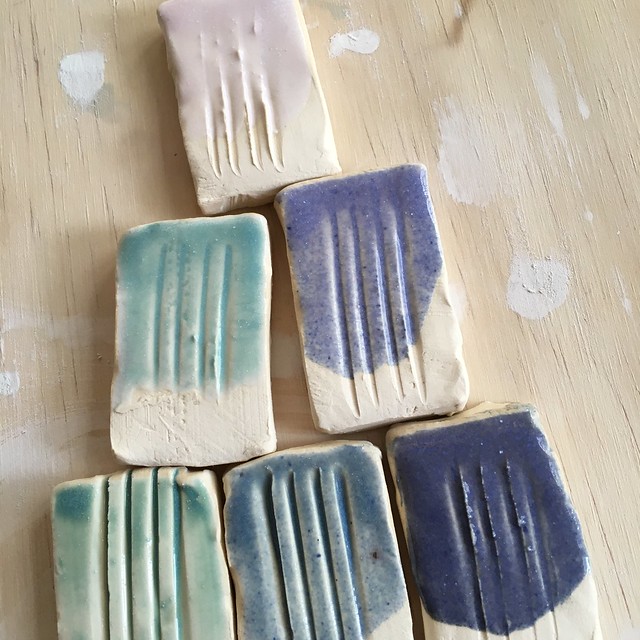
Colour needs mixing with a blender, appears a bit grainy. Base glaze is pinkish from tin oxide. Poured rather than dipped. Need to repeat this test but concentrating on the lighter oxides, tiles 1, 2 and 3.
I like the way the rutile has added texture especially to the Cobalt corner.